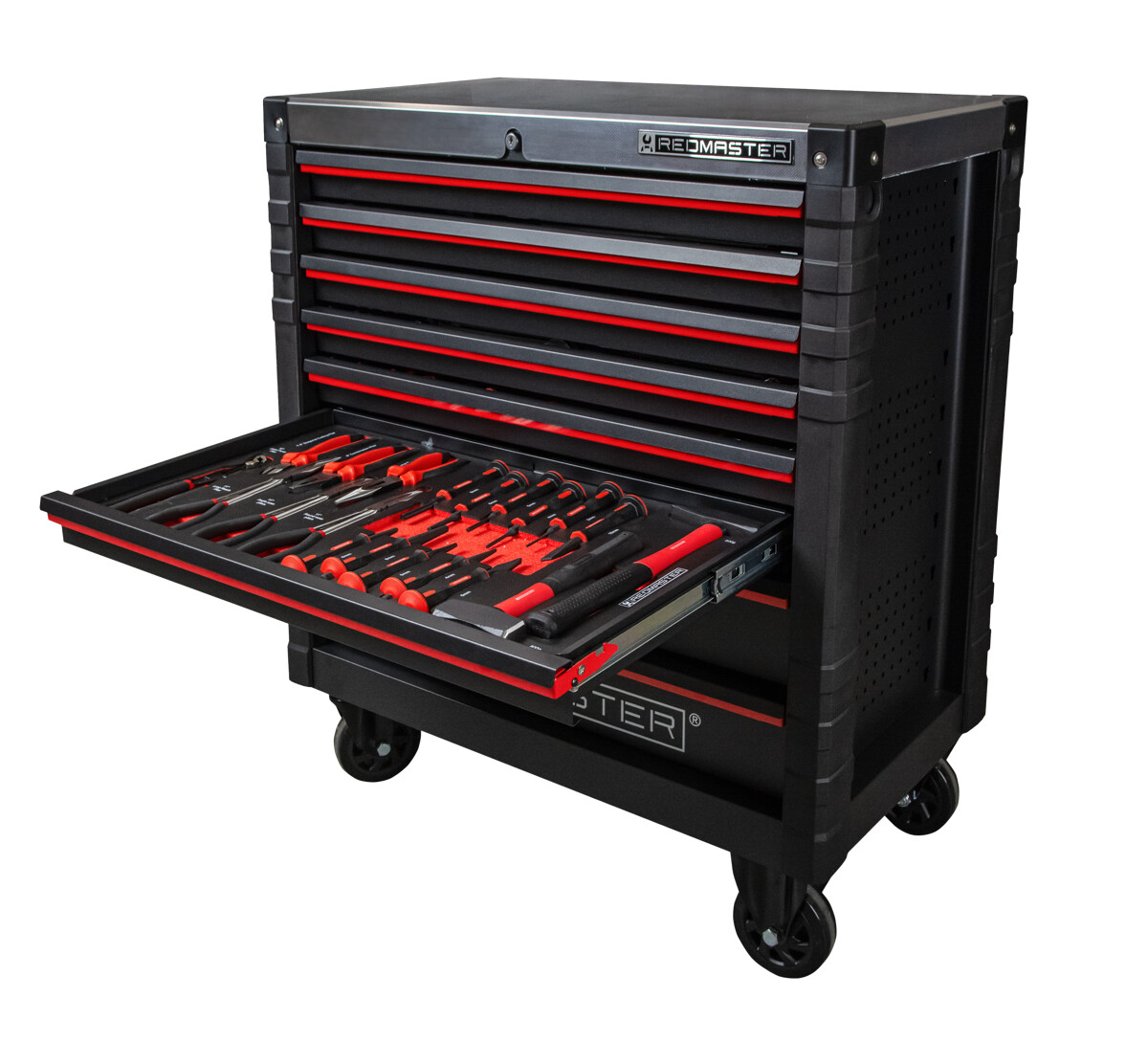
Although the modern tool cart is an essential part of workshop equipment, its history dates back only to the early 20th century. The first mobile tool chests were developed in Europe and the United States, where the growing industry and growing number of heavy tools required a practical way to transport them. Initially, these were simple metal or wooden chests placed on transport carts.
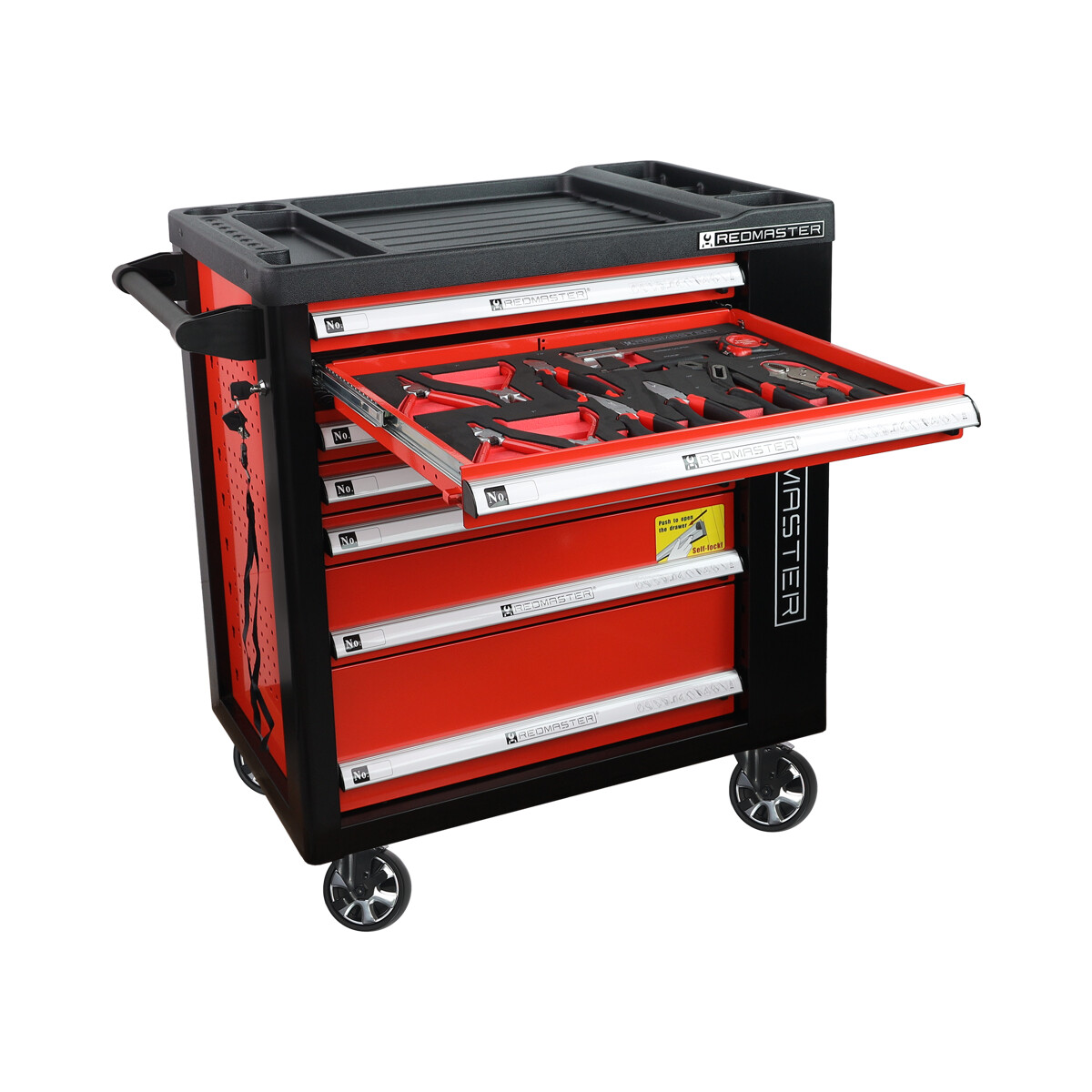 Redmaster Tool Cart 279 Pieces (A: 0813294)
The real breakthrough came with the development of the automotive industry in the 1920s and 1930s, when mechanics began to need quick access to an increasing number of tools – then the first mobile cabinets with drawers and wheels appeared, which were the prototype of today's tool trolley.
Although the origins of the forklift were not related to Japan, its modern form – more structured, ergonomic and modular – was strongly influenced by the Japanese Kaizen philosophy and the 5S workplace management system, popularized since the 1970s and 1980s mainly thanks to Toyota factories.
It was these concepts that introduced the idea of minimizing unnecessary movements, visual order and standardization to workshops – which directly influenced the development of carts with well-organized drawers, EVA foam inserts and precise tool arrangement.
The 5S system – a key element of Kaizen – is based on five Japanese principles of work organization:
It was 5S that led to the widespread use of trolley elements such as "shadow boards", foam organizers, colored markings, logical arrangement of drawers according to frequency of use, and mobile trolleys as a basic element of the workstation.
Today's REDMASTER tool trolley is the result not only of technological progress, but also of the philosophy of continuous improvement – Kaizen – which has changed the way of thinking about workshop organization to improve and optimize the work of mechanics.