The Dakar Rally has always been more than just a race. It's the world's most challenging off-road rally, where you compete not only with other participants but also with extreme temperatures, harsh terrain, and your own weaknesses. A unique prize awaits at the finish line – a Bedouin, whose triumphant lifting is a dream come true for almost every rally driver.
And while it's difficult to fit anything other than the traditional combustion-powered vehicles we've known for years into the romantic vision of racing across the desert or dunes, the Dakar is changing and entering the next stage of its evolution, and it's doing so with a power that could transform the future of heavy transport. At the heart of these changes are modern technologies, electrification, and finally, what only recently sounded like a futuristic curiosity – hydrogen trucks.
No test puts machines to such extreme tests as the Dakar. In a place where sand seeps into the smallest nooks, heat can be life-threatening, and the sun heats metal to near red-hot temperatures, every innovation must demonstrate that it's more than just a slogan from an advertising brochure. That's why this rally has become a testing ground for vehicle manufacturers and parts and component makers who want to show the world what the machines of the future might look like.
Hydrogen powered, hybrid, full electric – these terms are becoming increasingly common in campsite conversations. Mechanics who, not long ago, were quickly replacing turbines and air filters are now working on fuel cell modules, traction batteries, and energy recovery systems.
And most importantly, these vehicles are really starting to get there 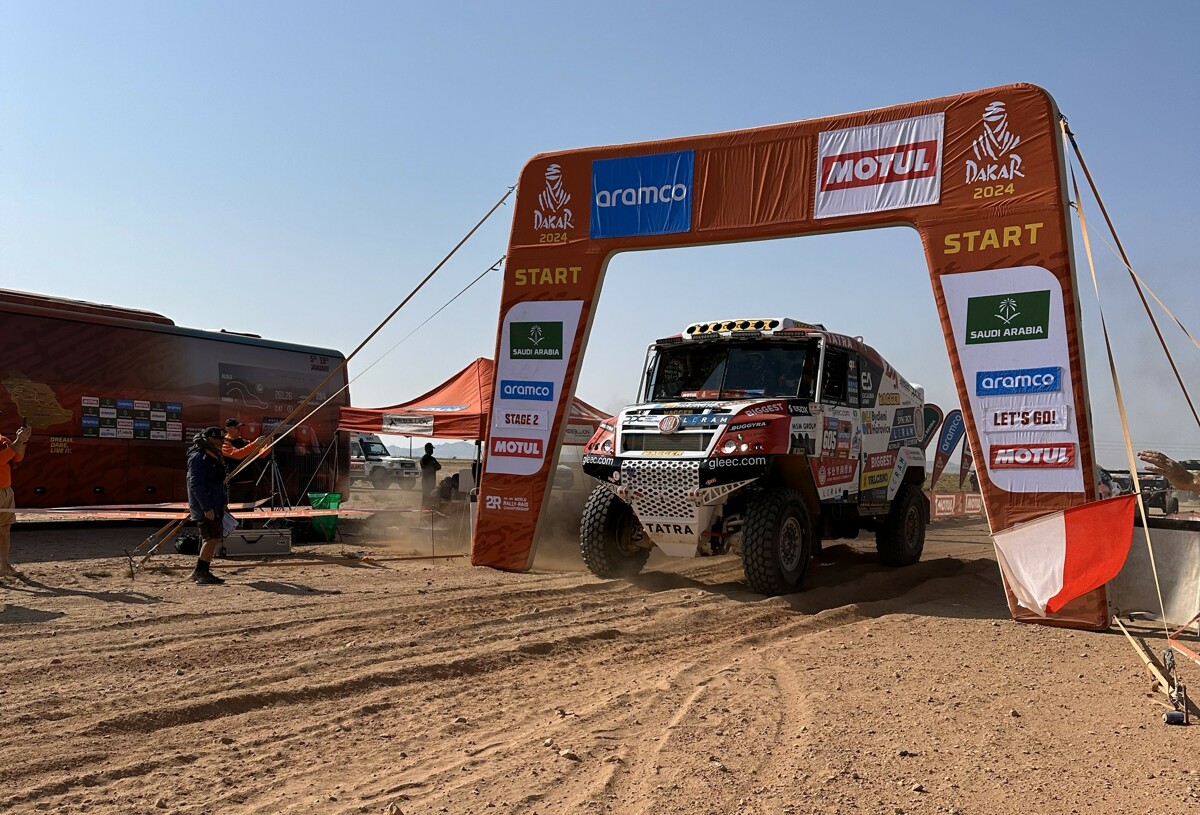 dregs!
One of the most moving sights of recent editions has been the trucks that leave no acrid exhaust trail behind them—only pure steam. When they take off, they don't roar like turbocharged V8s. A futuristic whistle echoes across the dunes like the promise of a new era. Teams like Gaussin – H2 Racing Truck and KH-7 Ecovery / KH-7 Epsilon can proudly say they're achieving incredible feats.
To many drivers, this sounded like heresy. But when it turned out that hydrogen allows for instantaneous massive torque and a much better weight distribution than hybrids or electric vehicles, skeptics began to change their minds. The hydrogen truck climbs sand dunes with an ease that was unthinkable just a few years ago.
Most importantly, it retains the spirit of Dakar. Drivers say they feel the same tension, the same magic of tackling the desert. The difference is that they're driving a machine whose technology has the potential to change the future of the entire industry.
Another star is autonomous diagnostic systems that monitor temperatures, stresses, pressures, and thousands of other parameters in real time, allowing mechanics to react before a failure occurs. Algorithms run in the trucks to predict whether a given part will last another 200 km or maybe 20. And while the Dakar has always been a symbol of chaos, it is precisely the control over chaos that holds the key to victory in the era of modern technology.
There are also hybrid machines in which powerful diesel engines are transformed into generators that supercharge the car's electric motors, providing torque unattainable by traditional methods. For many teams, this is the ideal compromise—combining brute power with energy efficiency.
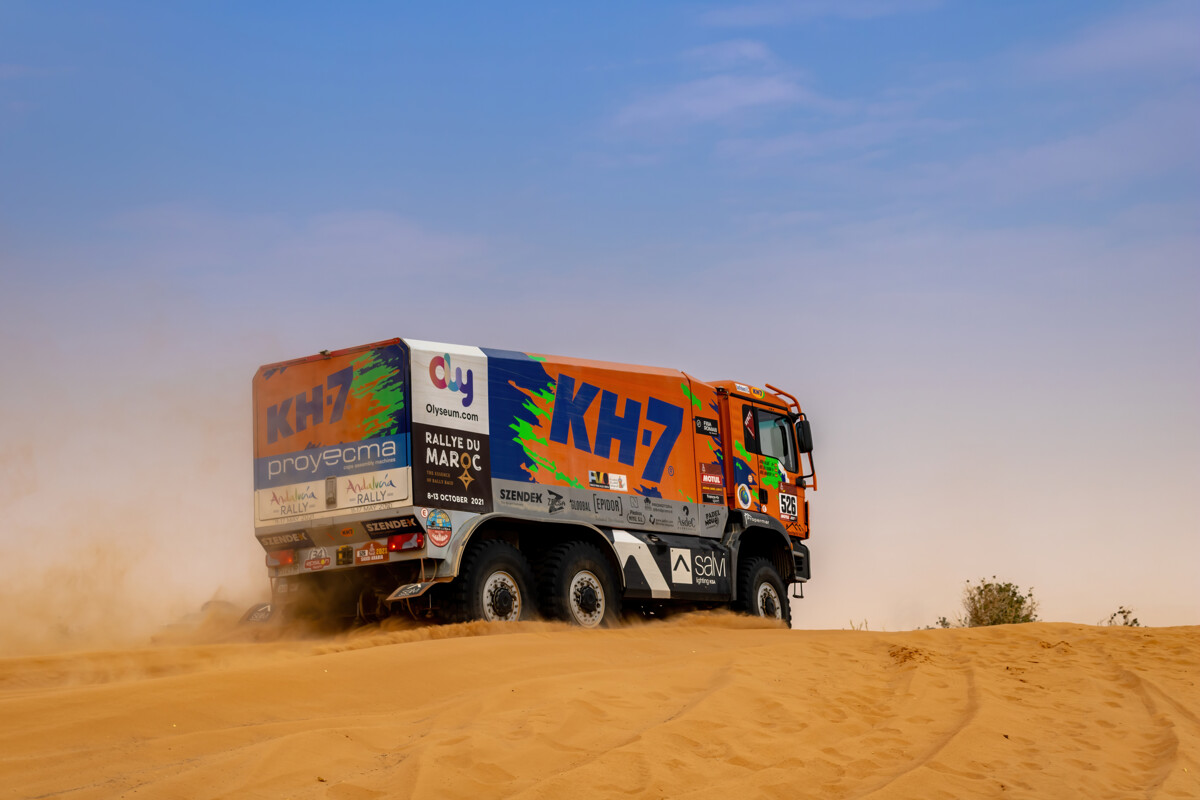 The KH7 team truck during the rally
(source: Walter_D - stock.adobe.com)
Yet, despite this technological revolution, the spirit of the rally hasn't changed. Evenings at the bivouac still exude a sense of camaraderie and adrenaline. Tales of collapsed bridges, trucks buried up to their cabins, and a battle against time and nature are heard. Only today, laptops and diagnostic stations lie alongside classic tools, and hydrogen tanks stand next to fuel canisters. Mechanics in grease-stained overalls program new ECU maps. This meeting of tradition and the future creates an extraordinary energy.
And perhaps this is precisely why the question arises: why is a four-kilogram brass cast more valuable to drivers than money? The answer lies in a legend built since 1978, when the Dakar became a rally that separates the daredevils from the true heroes. The extreme nature of the route, the struggle against the desert and one's own weaknesses, the daily effort measured in dozens of hours—all of this makes the rally a test for everyone, without exception. Its beauty, media coverage, and extreme emotions—the dramas, triumphs, gestures of support between rivals—create a unique spectacle beloved worldwide.
Then there's the navigation, the most difficult in the world. Without GPS, using only a roadbook, in terrain devoid of reference points—errors happen in a matter of seconds, and awareness of the error only comes many kilometers later.
That's why the "Bedouin" is so important. It doesn't symbolize money, but rather proof of overcoming one's own limitations, surviving the world's toughest rally, and covering thousands of kilometers in unforgiving conditions. It's a testament to determination and courage. A sign that someone has joined the ranks of those whose names are etched in motorsport history.
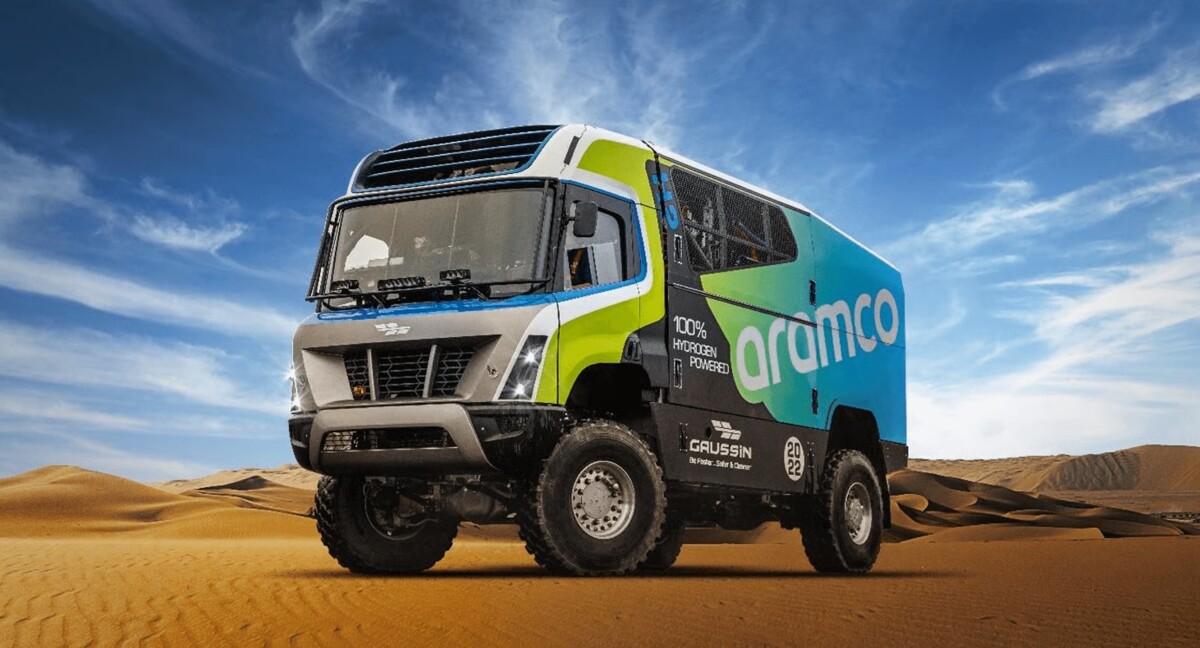 H2 Truck GAUSSIN
Because Dakar is a proving ground where technologies are born that, a few years later, find their way into regular trucks driving on European highways. If it survives Dakar, it survives anything.
Hydrogen power systems, advanced energy recovery systems, and intelligent diagnostic algorithms—these are no longer experiments. These are elements that can make heavy transport more environmentally friendly, more efficient, and safer.
Gazing out at the scorching desert, at trucks slicing through the dunes like giant, futuristic beasts, it's hard not to feel the thrill. Dakar has always been a place where technology meets extreme challenges. But today, it's doing so in a way that changes not only the history of motorsport but also the future of the entire transportation industry.
If you want to see what the truck of tomorrow will look like, look no further than Dakar. For it is there, amidst the sand, noise, and sweat, that a new era of trucks is being born.
