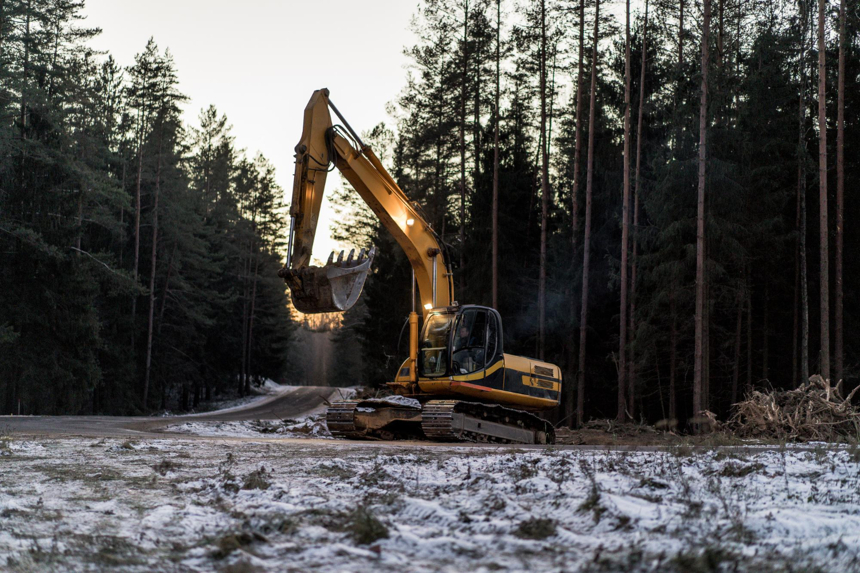
How do you replace a bucket on an excavator? This question often arises among those working with construction machinery, as replacing attachments is one of the most common maintenance tasks. The process involves disconnecting the pins or quick coupler, securing the machine's boom, and mounting the new bucket in a way that ensures stability and safety. It's important to check the condition of connecting elements, such as pins and bushings, before assembly to avoid looseness and damage during operation. With the right procedure, replacing a bucket on an excavator is easy even for less experienced operators.
Contents:
Excavator bucket wear is a natural consequence of construction equipment operation, but emerging symptoms may indicate the need for replacement. The most common signs include cracks, wall abrasions, chipped edges, deformation, and excessive tooth wear . It's important to regularly inspect the condition of fasteners and welded components , as weakening them can lead to dangerous failures. Regular diagnostics ensure excavator bucket wear doesn't surprise the operator during operation.
When to replace an excavator bucket is a dilemma for many construction companies, as delaying action increases operating costs and the risk of downtime. Replacement is necessary when the bucket loses its working capacity, numerous cracks appear , or further reinforcement of the structure becomes uneconomical. Problems with work precision, such as material slippage or inability to dig effectively, are also a worrying sign. Knowing when to replace an excavator bucket helps maintain productivity and safety on the construction site.
Replacing a bucket on an excavator begins with safely positioning the machine, lowering the boom, and locking the hydraulics . The operator then removes the safety devices, removes the pins, or activates the quick coupler, which allows for quick attachment removal. Installing a new bucket requires careful alignment of the mounting points and ensuring that all components are working smoothly. After installation, it's a good idea to perform a few test runs to ensure the bucket replacement on the excavator has been performed correctly and that the attachment is operating stably.
You already know how to replace an excavator bucket. So it's worth investing in proven solutions. AUTOS provides a wide selection of components for construction machinery, including attachments that significantly simplify operators' daily work. The offer includes an extensive catalog of accessories, buckets, quick couplers, and parts that support machine efficiency . A complete product list is presented in the Construction Machinery Attachments section, which allows companies to comprehensively equip their fleets with components that enhance the functionality and reliability of their equipment.
An excavator bucket must be suited not only to the type of machine but also to the nature of the work being performed. Reinforced models are suitable for working with clay or stone, while standard buckets are suitable for digging light soil . Parameters such as width, capacity, and compatibility with the machine's mounting are also important. The correct selection of attachments increases the excavator's bucket's efficiency and reduces wear on hydraulic components.
Knowing how to replace an excavator bucket, what signals indicate bucket wear, and when to replace an excavator bucket can help avoid costly breakdowns and downtime. Regularly inspecting attachments, quickly responding to damage, and selecting the right replacement bucket ensure that excavator bucket replacement is a smooth process and the machine remains fully operational. A properly fitted excavator bucket increases work efficiency and operator safety, which is crucial on any construction site.